

I’m Dr. Alison Bishop, I am the founder of Resilience Resourced. I am an educator, researcher, and coach practitioner in resilience, specializing in empowering professional women to protect their career, create guilt-free time for themselves while feeling good about the way they are caring for both their aging parents and their children while advancing their career.
The name Resilience Resourced comes from a simple but powerful image: a river. Every river has a source—the place where its flow begins, the wellspring that sustains it through every season. I believe that resilience works the same way. It doesn’t come from pushing through or bouncing back. It flows from a source within each of us—our unique pattern of responding to life’s challenges, what I call your Resilience Signature.
When we’re overwhelmed, we’ve often been pulled so far downstream by the current of everyone else’s needs that we’ve forgotten where our own source is. Resilience Resourced is about helping you flow back to that source, to reconnect with the inner wellspring that sustains you. It’s about resourcing your resilience from within, rather than constantly seeking it from external fixes that don’t address your unique needs. When you understand your source—your Signature—you stop running dry. You learn to replenish yourself in ways that actually work for you, creating a sustainable flow that allows you to care for others without depleting yourself. That’s what it means to be Resilience Resourced.

I understand What It’s Like to Be the CEO of Overwhelm.
I have spent years running on adrenaline, trying to keep everyone happy while quietly struggling inside. I am the Mum of two children (now adults) one of whom has very significant autism. My parents are now gone, but have had quite a prolonged period of care needs, especially as my Dad had dementia. So, trying to carry all of those care needs while pursuing a career in academia meant that I didn’t feel successful at any of it.
Traditional theories of resilience offered me no help with this as it seemed to suggest that pushing through meant I was resilient while anything less meant I wasn’t resilient. I felt like I was being asked to live as if the batteries of life would never run out which felt impossible. That felt really mean, and added to my burden of caring for my family. It also meant I felt that my life had become reduced to a never-ending to-do list rather than the experiences that I wanted it to be. I wanted to feel connected to my parents while I still had them with me. I wanted time to sit and talk with them not just to turn up to collect a prescription, or vacuum their house. I realized that the only way to thrive wasn’t to try harder, but to build a smarter, kinder system.

Traditional resilience suggests that we can resist the consequences of adversity and continue to function in life as if nothing has happened. Failing that, we have the option to quickly bounce back and to carry on. If that is unsuccessful, we can learn how to be resilient through techniques like Mindfulness. While these techniques certainly have their place, learning them in the midst of a crisis adds to the burden of the moment as these techniques take time to learn and perfect. I felt that the solution that I was looking for would come not from willpower but from a strategic framework.


I decided to undertake a PhD, and research resilience in mothers caring for children with autism. Autism presents a unique ongoing challenge in parenting, especially when, like me, you are not autistic yourself. I used a method of data analysis that has theory generating potential and from this I created a new much kinder model of resilience. This model does not categorise people into either resilient or not resilient groups. Instead, it looks at what the mothers did to continue caring for their children. It concludes that resilience is something that you do rather than something that you are. It also demonstrated a personalised style of responding to challenges which means that armed with this knowledge, each of us can respond more efficiently and compassionately to ourselves and the challenges we face.
I decided to leave academia and set up a coaching business called Resilience Resourced so that I could use my resilience cycle and signature model with people facing continuous caring challenges. I saw that the standard advice was broken, but this model offers a profound, personalized solution that actually works for high-achieving women like us, meaning I could use my model to do some good in the world.
My mission is to help women in the sandwich generation stop sacrificing their personal joy and career momentum. I’m here to show you how to master your unique Signature to reclaim your time, protect your finances, and move from surviving to feeling successful at leading your life.

Dr. Alison has presented her resilience, hope, and optimism research at industry conferences. Formerly a lecturer in Positive Psychology Coaching and research methods within the Masters of Applied Positive Psychology and Coaching Psychology (MAPPCP) program at the University of East London, Dr. Bishop now dedicates her expertise to private coaching and leading transformational workshops. Dr Bishop is also a faculty member at the Institute of Positive Psychology Coaching, where she trains coaches, leaders and professionals on resilience and well-being to enhance their personal and professional lives.
Inspired by the courage of individuals who confront challenges and create meaningful change, Dr. Bishop exemplifies the transformative power of positive psychology in her own life, leaving a profound and lasting impact on those she serves.

Certified Coach/Accreditation: I have a first-class masters degree in Applied Positive Psychology and Coaching Psychology and am currently almost complete in my coaching accreditation with the International Coaching Federation.
I have a PhD in Psychology with a specialist area of resilience.
Resilience Model Specialist: I am the author of the resilience cycles and signature model.
Professional Background: I have worked in the insurance, education and care industries and in academia.
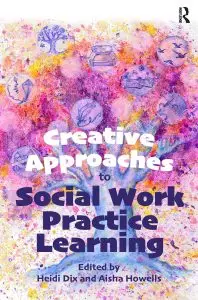
Taylor,* A., (2022) The musician, the Stripper, and the Boxing Day flood: the use of stories in social work. In Dix, H., & Howells, A., Creative Approaches to Social Work Practice Learning. St Albans UK: Critical Publishing Ltd.
Available on Amazon.co.uk here
Toneatto, M., Taylor,* A., Trinh, S-H., (2025) Investigating the Use of a Conceptual Framework for a Positive Psychology Coaching Practice using Grounded Theory: An International Study. The Journal of Positive Psychology Coaching.
*Taylor is my previous surname
Bishop, A. (2025) Embracing a Kinder Model for Coaching Resilience: Part One – the Resilience Cycle. Journal of Positive Psychology Coaching (JPPC) 2 (1—19) Retrieved from https://www.journal.theippc.com/article/129124-embracing-a-kinder-model-for-coaching-resilience-part-one-the-resilience-cycle
Bishop, A. (2025). Embracing a Kinder Model for Coaching Resilience: Part Two – the Resilience Signature. Journal of Positive Psychology Coaching (JPPC), 2, (1–24). Retrieved from https://www.journal.theippc.com/article/129195-embracing-a-kinder-model-for-coaching-resilience-part-two-the-resilience-signature

Bishop, A., (2024) Five Tips to help you start new hobbies in retirement. The Conversation. https://theconversation.com/five-tips-to-help-you-start-new-hobbies-in-retirement-226764#comment_2975251

Bishop, A., (2025) Five tips to find what really brings you joy outside of work. The conversation. https://theconversation.com/five-tips-to-find-what-really-brings-you-joy-outside-of-work-238722

Walking my little dog Hugo to replenish my Physical domain.
Playing the piano, or reading murder mysteries – my essential Cognitive break.
Learning how to finally relax and truly feel successful at life
If any part of my story resonates with you, know this: your current path is unsustainable, but it is entirely fixable. You don’t have to choose between your success and your sanity.”